The Parable of the Kharkovchanka: How Agreed Dimensions Reached the South Pole
Sometimes the most important precision is not the precision of a single number.
A Machine for the Edge of the Earth
In the late 1950s, engineers faced a task that sounded almost impossible: to create a machine capable of crossing Antarctica, reaching the South Pole, and returning. This was not simply a tractor or an all-terrain vehicle. It was a genuine home on tracks — a machine in which people could live, work, and move through an icy wilderness, trusting the technology in a place where a mistake could cost everything.
The Kharkiv engineering school worked on this machine. The running gear was built by specialists accustomed to heavy armored vehicles: tracks, rollers, power frame, engine, mechanics, structural strength. The cabin was built by aviation engineers — people who knew that if a structure is correctly coordinated, it will come together.
Two Engineering Cultures
For a tank builder, a large machine means absolute dimensions, tolerances, fits, metal, and power base. For an aviation engineer, a large structure means above all mutual coordination.
An aircraft cannot be assembled "by tape measure." It has too many mating parts: skin, stringers, frames, ribs, holes, joints, axes, tooling. If each part is precise in itself but not coordinated with the others, the aircraft will not assemble.
This is why aviation developed the plaz-and-template method (also known as the loft-and-template method).
The plaz is the common geometric master. The template is the means of transferring that geometry into production.
The power of the method lies not in magically eliminating error, but in something more fundamental: it forces all parts to originate from one agreed-upon foundation.
Kharkiv aviation engineers had a direct, practical encounter with this discipline. When the Douglas DC-3 was licensed for production as the PS-84 — later known as the Li-2 — the Kharkiv Aviation Plant worked with this technology. The DC-3 licensing did not merely transfer a design. It transferred a production culture: full-scale geometry, lofting, templates, and tooling all derived from one master foundation. That lesson stayed in Kharkiv engineering practice long after the aircraft itself moved on.
The Cabin That Settled Into Place
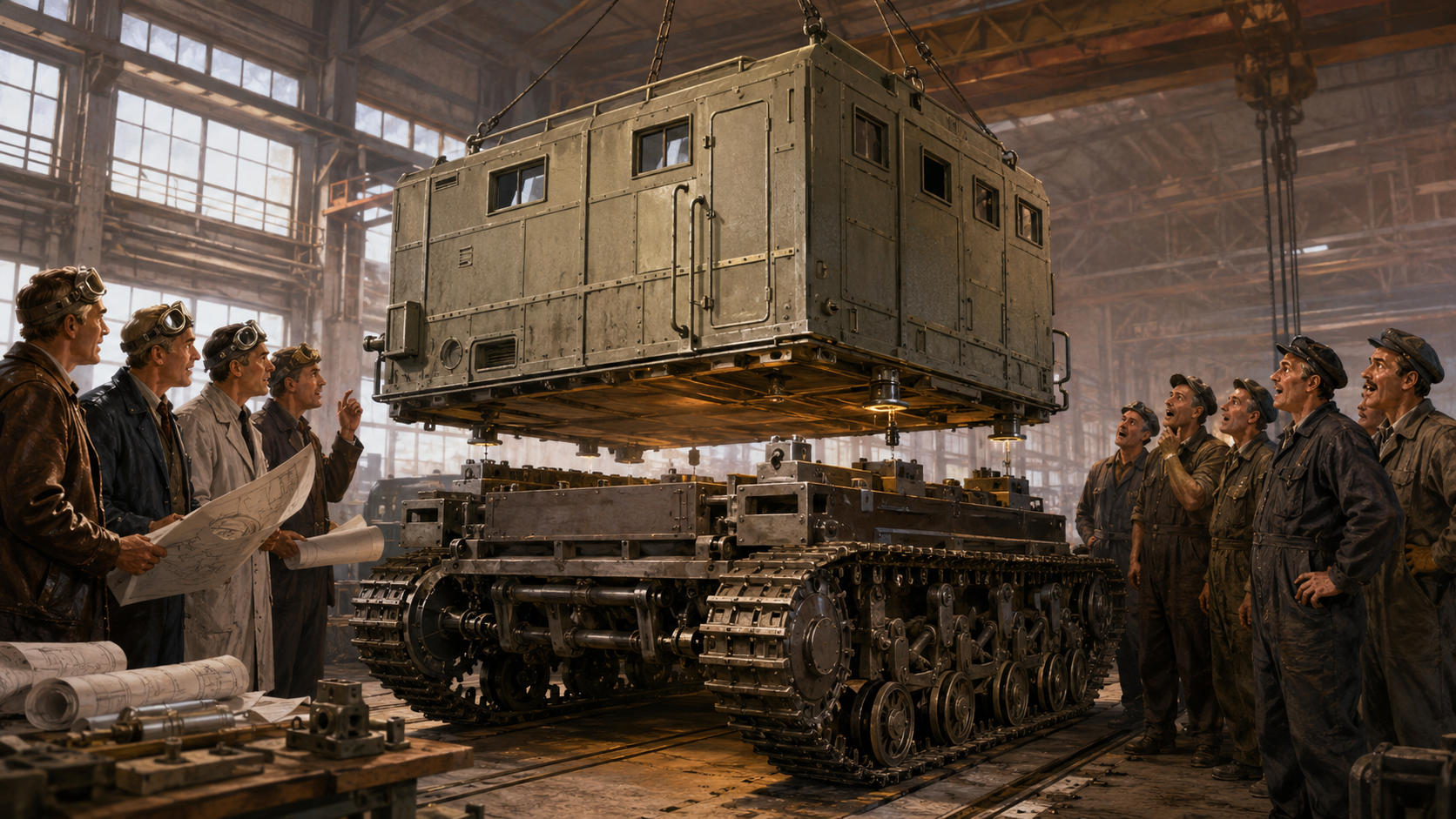
When the time came to join the running gear and the cabin, the skepticism was understandable. Two large assemblies. Two different factories. Two different production cultures. Many mating points. Surely something would not align.
But the aviation engineers had not worked from an approximate tape measure or a "we'll fit it on location" approach. They worked in the logic of the plaz-and-template method.
When the cabin was lifted and lowered onto the chassis, what happened next is what genuine engineering culture exists for: the large part settled into its place.
Not because someone guessed the dimension. Because the dimensions were coordinated with each other.
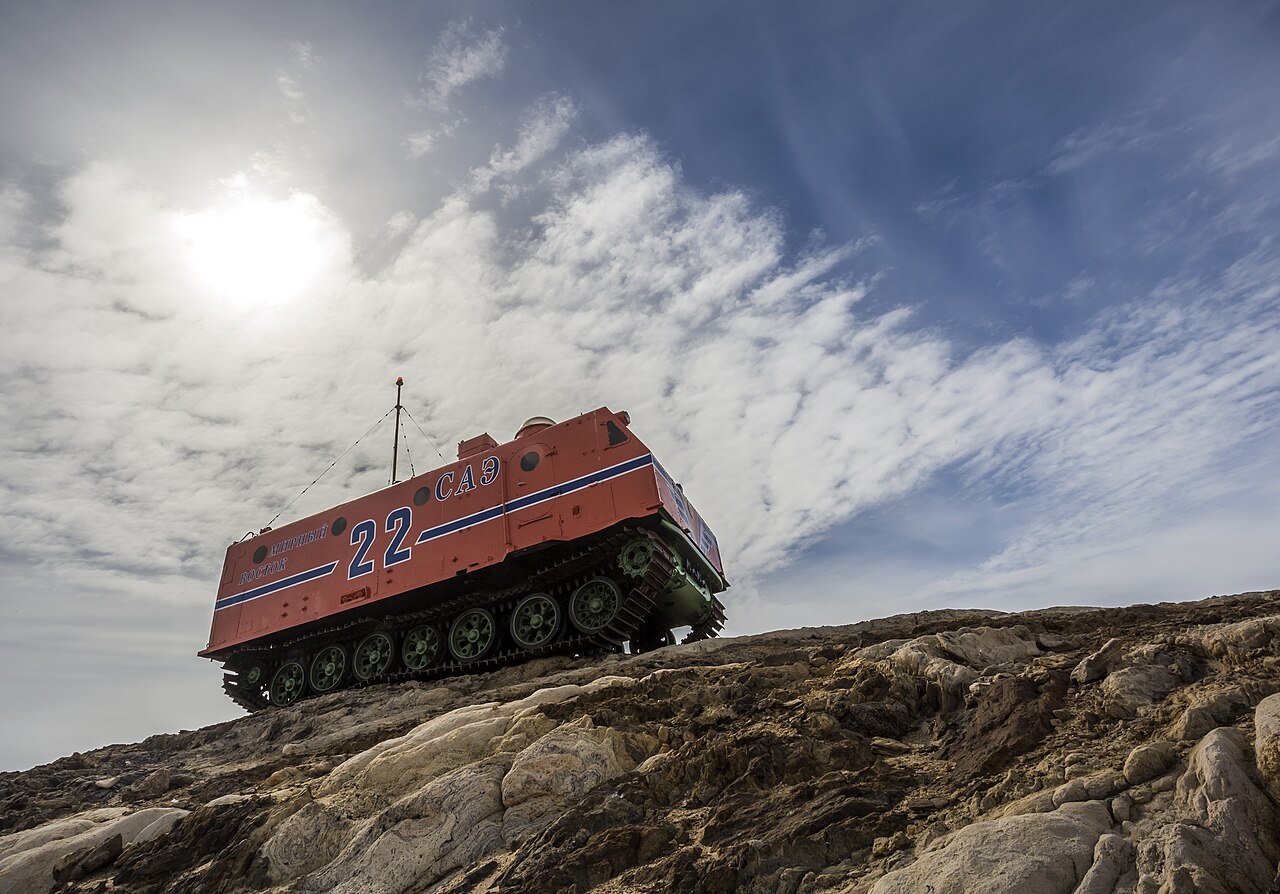
This machine entered history under the name Kharkovchanka. It became part of the Antarctic expedition and reached the South Pole. But for an engineer, the important thing in this story is not only the achievement itself — it is the reason why a large, complex system was able to become a single whole.
The Moral for Software Projects
In software projects, a similar problem occurs.
- A venture capitalist looks at the project through risk and money.
- A founder looks through idea, market, and speed of movement.
- A CTO looks through architecture, technology, and implementation complexity.
- A project manager looks through deadlines, team, and execution control.
Each may be right in their own way. But if they have no common foundation, they are not discussing the same project. Each holds their own measuring tape.
One says: "This can be done quickly." Another says: "There is high technical complexity here." A third says: "We need the next milestone." A fourth says: "The team can handle it."
And between them, a fog forms.
Digital Polygraph as a Calculated Plaz
Digital Polygraph should not be seen as a magic instrument that predicts the future with absolute precision. That framing should not exist at all.
Its value lies elsewhere.
Digital Polygraph creates a common calculated plaz for a software project. It forces the participants of a conversation to pass through the same structure:
- what is being created;
- what maturity stage the product is at;
- what volume of functions is declared;
- what complexity is acknowledged;
- what novelty is present;
- what labor intensity follows from the chosen parameters;
- what team is needed;
- what timelines look coordinated;
- what result is fixed in the PDF report.
After this, the conversation changes. Participants no longer argue in fog. They see the same calculated picture.
The Main Conclusion
The plaz-and-template method helped assemble aircraft and large machines because it gave them a unified geometry.
Digital Polygraph does similar work in the world of software projects.
It does not assemble metal. It assembles understanding.
It helps an investor, founder, CTO, manager, and client representative see the same project — not through a fog of expectations, but through a coordinated calculated structure.
That is why Digital Polygraph is not merely a calculator. It is a metrological instrument for software projects.
Ready to align your team around a single engineering picture?
CALCULATE PROJECT EFFORT & TIMING →Digital Polygraph is not financial or investment advice. It is an engineering tool for project coordination.