History of Ukraine
Modern Ukrainians began to form in deep antiquity, starting with the Trypillian culture, which existed on the territory of Ukraine about 7,500 years ago. These early farmers, establishing a sedentary lifestyle, laid the foundation for future ethnic diversity. However, the process of forming the Ukrainian nation was neither instantaneous nor linear—it resulted from the interaction of many peoples, cultures, and civilizations.
Interaction with Various Cultures:
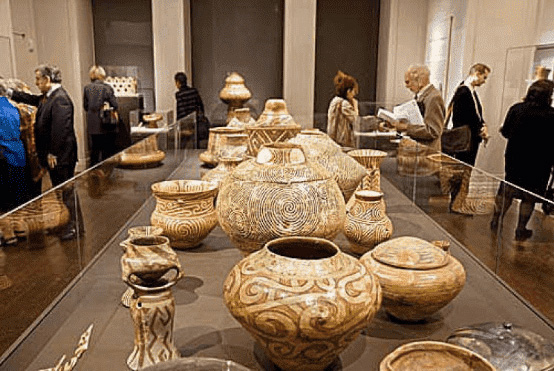 Trypillian pottery of the 4th–3rd millennium BC
Pottery of the Late Trypillia Culture.
Found on the territory of Ukraine, these Late Trypillian ceramics date back to the 4th–3rd millennium BC.
They reveal the artistic and cultural achievements of the Trypillian people.
 6,000-year-old cultivated grain from Trypillia era — Legedzyne, Ukraine
The oldest cultivated grain in Europe.
Discovered sealed inside a clay vessel in the village of Legedzyne, this field cornelian cherry seed is over 6,000 years old.
It is undeniable evidence that agriculture on the territory of modern Ukraine began earlier than in most parts of Europe.
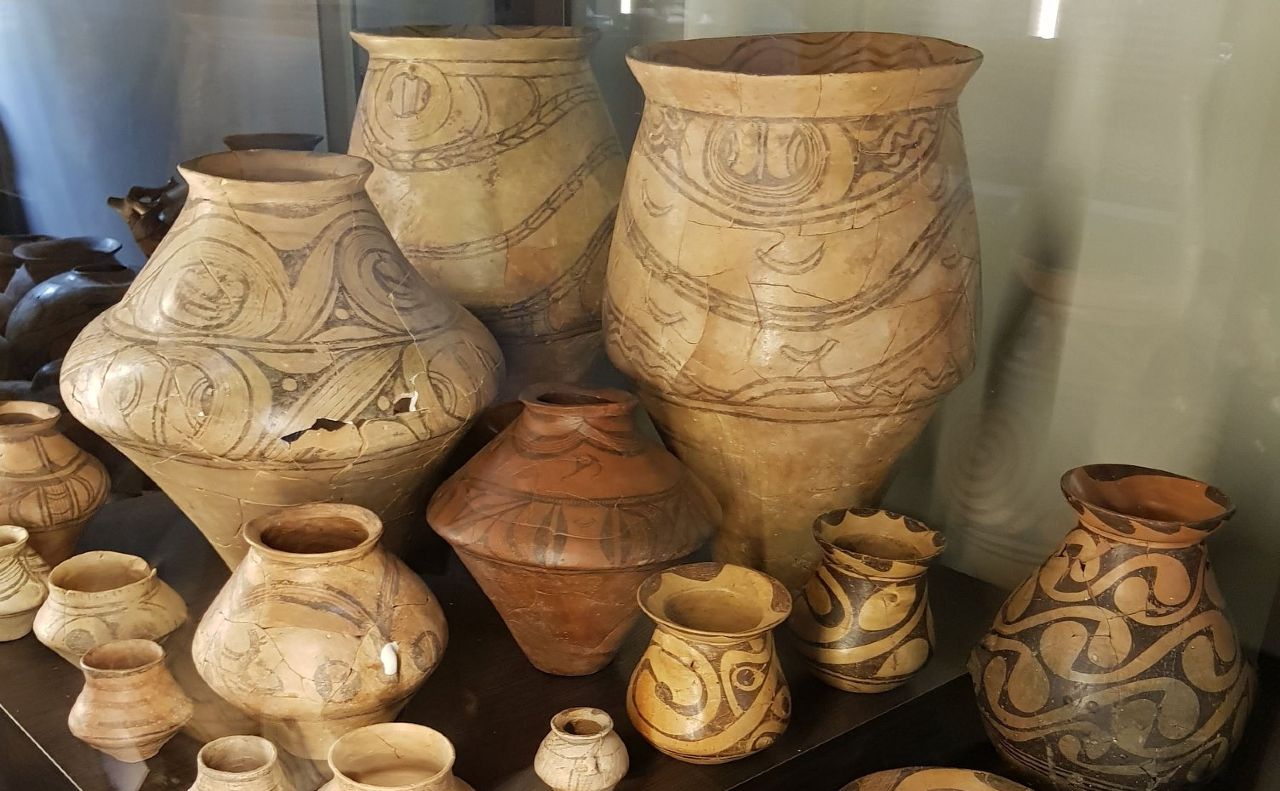 Trypillian Civilization Pottery — Authentic Artifacts from 4000 BC, Ukraine
Original clay vessels of the Trypillia civilization (circa 4000 BC — from the later period of Trypillian civilization).
These are not modern reconstructions but authentic artifacts discovered during archaeological excavations
in numerous settlements of the Trypillia culture — ancestors of Ukrainians.
The ornaments carry symbolic and agrarian meanings, and the shapes reflect advanced pottery craftsmanship.
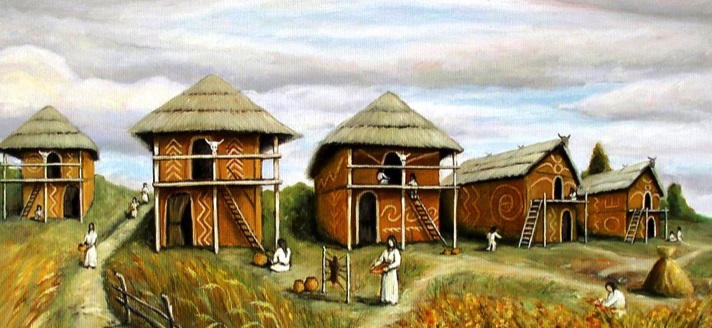 Trypillian Housing Reconstruction — Ukraine, 4th–3rd millennium BC
Depiction of reconstructed Trypillian dwellings (approximately 6,000 years ago).
Typical two-story clay houses with thatched roofs, decorated with geometric patterns —
based on archaeological evidence.
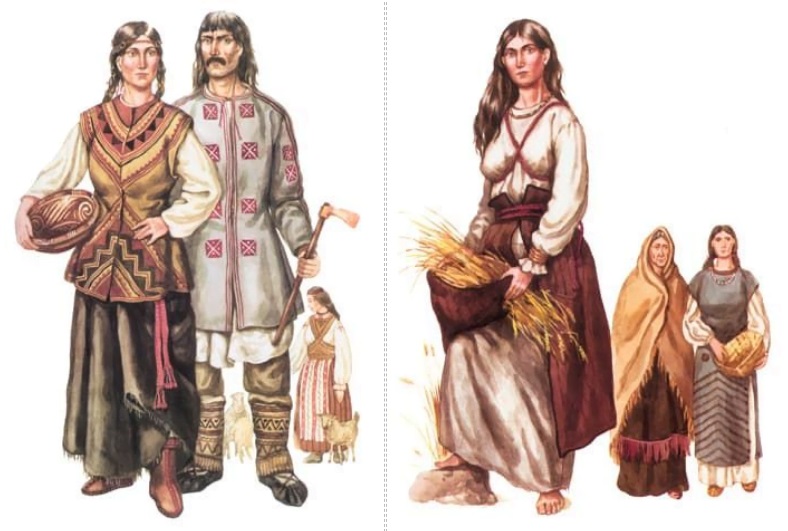 Trypillian clothing reconstructed by artist Zinaida Vasina
Reconstruction of Trypillian clothing based on archaeological findings (artist Zinaida Vasina).
The attire of the inhabitants of the Trypillia civilization
is recreated using artifacts, ceramic patterns, and figurines.
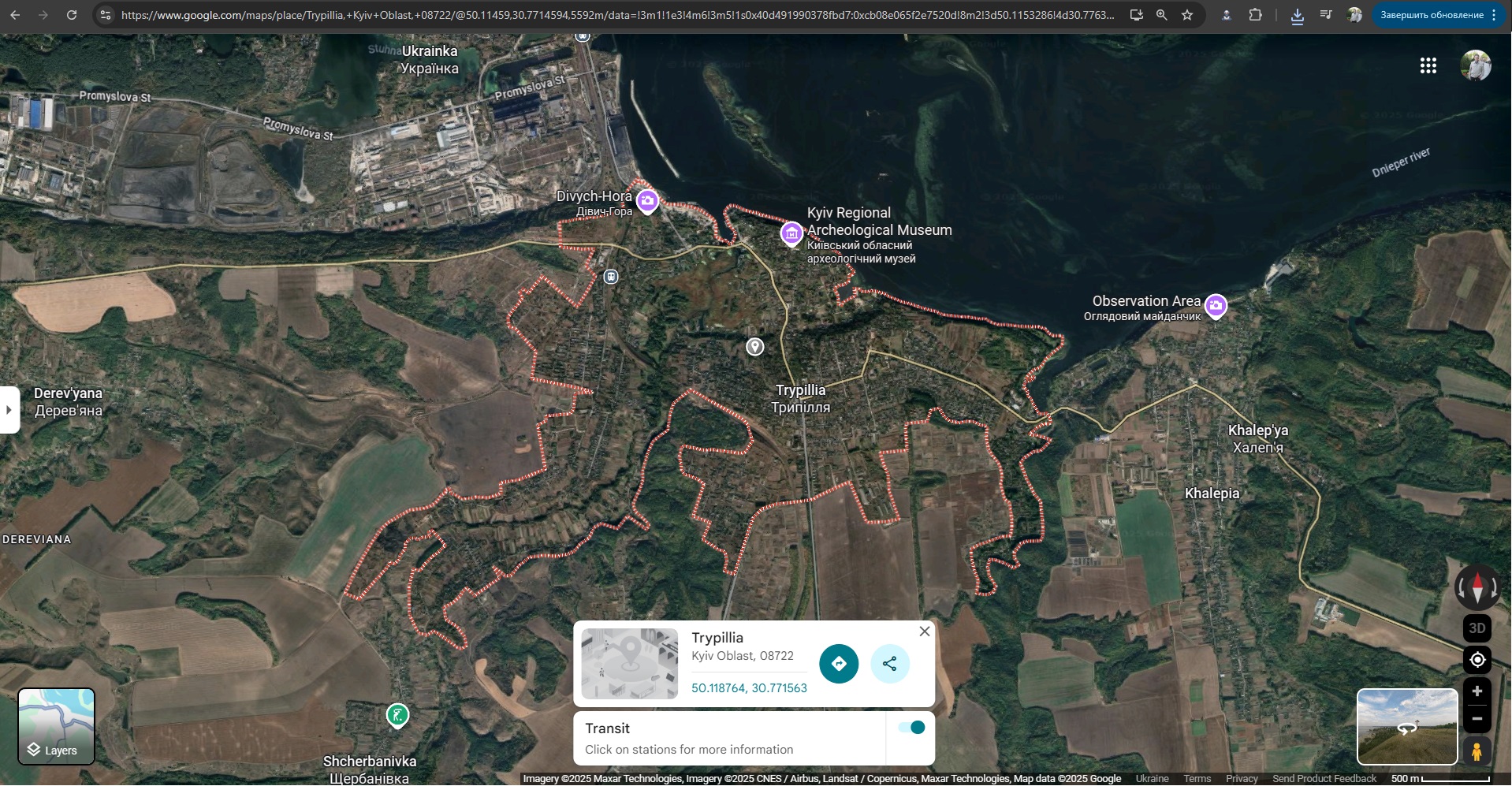 Satellite view of modern Trypillia, Kyiv Oblast (50.118764° N, 30.771563° E)
Satellite image of modern Trypillia, Kyiv Oblast —
the birthplace of one of the oldest European civilizations (circa 4th millennium BC).
Coordinates: 50.118764° N, 30.771563° E.
The first farmers on the territory of Ukraine created a unique society with highly developed economic traditions, which became the basis for the further development of the sedentary population.
Zmiyiv Ramparts: 2600-Year Proof of Kyiv's Greatness
Every morning thousands of Ukrainians drive out of Kyiv and see them with their own eyes — ancient ramparts as tall as a five-story building. These gigantic earthwork fortifications stretch across Ukraine for hundreds of kilometers, silently testifying to the greatness of our ancestors. The Zmiyiv Ramparts are not just an archaeological monument; they are LIVING PROOF that Kyiv existed long before all European capitals.
 Zmiyiv Ramparts aerial view — 2600-year-old earthwork fortifications
These fortifications, dating back over 2,600 years, provide compelling evidence that
the origins of Kyiv trace back to at least the same period.
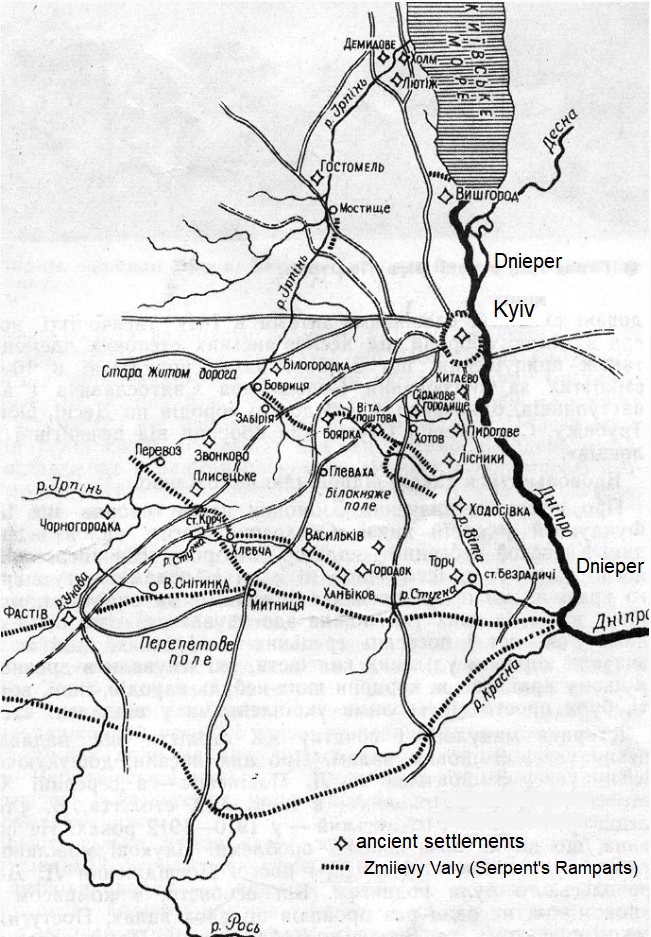
Zmiyovi Valy (Serpent's Walls) are ancient fortifications about 2600 years old, built to protect settlements on the site of modern Kyiv. Their existence provides a basis for believing that the city's true age is at least 2600 years old.
The total length of the walls is up to 2000 kilometers. This is more than just an archaeological monument:
This was a distributed security architecture, showing that advanced state organization in modern Ukraine's territory existed much earlier than traditionally acknowledged by Moscow-based historians.
Modern technologies (GIS, satellite imagery, LIDAR) allow for the study of the ramparts — an interesting task for engineers and data analysts.
The name "Zmiyovi Valy" sounds like something from a fantasy world, which attracts the attention of gamers and science fiction writers.
For cybersecurity specialists, it's a reminder: effective defense starts with a well-thought-out architecture, and this was known 2600 years ago.
According to A. S. Bugay, the Zmiyovi Valy (Serpent's Walls) were built in the 7th–6th centuries BC, a fact confirmed by archaeological analysis. He didn't just sit in an office; he personally walked hundreds of kilometers of the walls, took dozens of measurements, and saw things his critics missed. It's thanks to this persistence that we have evidence of the 7th–6th century BC construction. Bugay is Ukraine's Schliemann, who discovered Troy. We know of other great "amateurs" who were more dedicated to their work than many professional academics: Darwin was a theologian, Pasteur a chemist, and Mendel a monk. Bugay, a professional mathematician, walked the Zmiyovi Valy, excavated structures deep within the earthen ramparts, and documented the construction methods as identical to those of ancient fortified settlements.
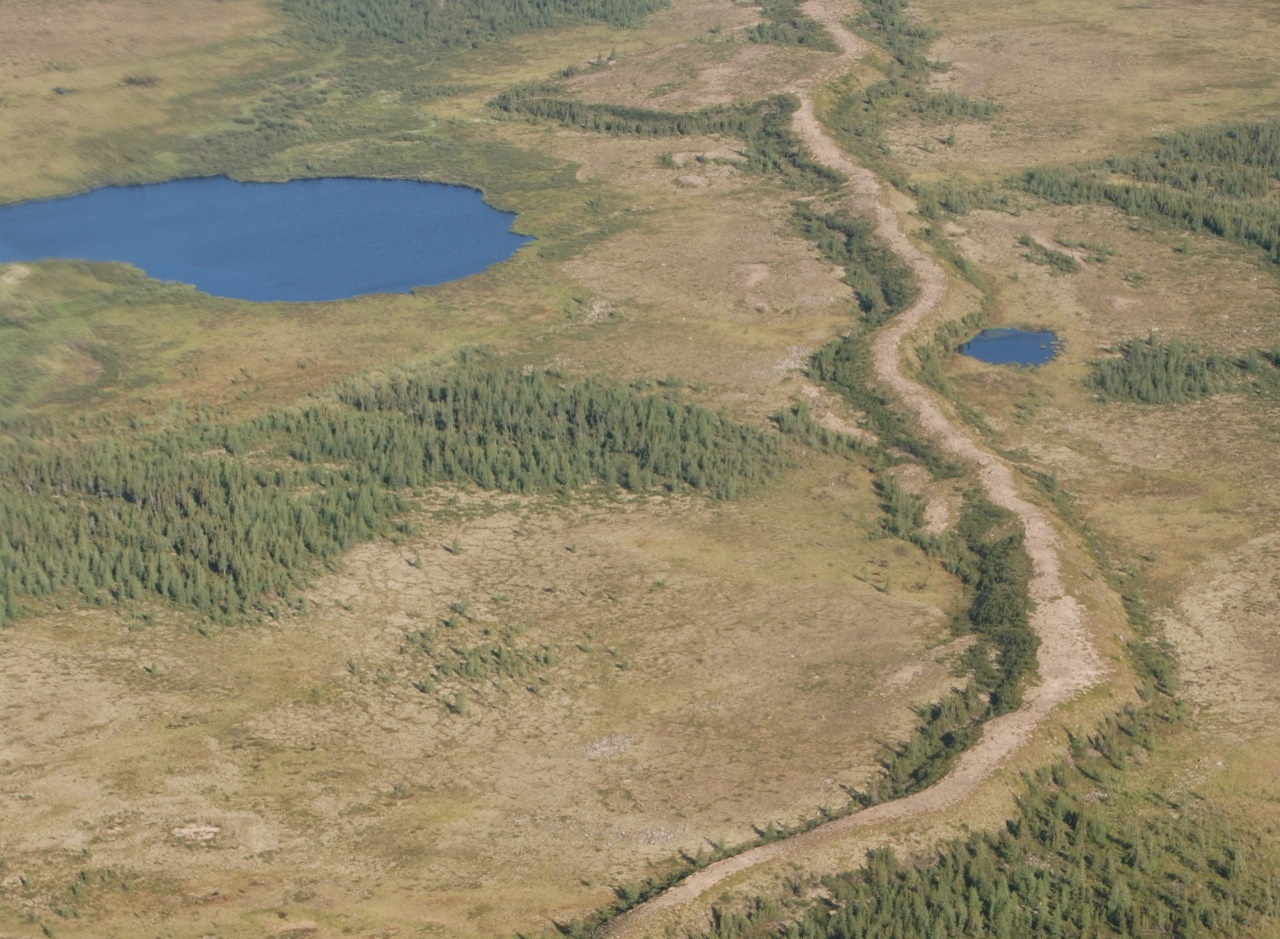 Zmiyiv Ramparts aerial view — 2600-year-old earthwork fortifications
Aerial view of Zmiyiv Ramparts — ancient earthwork fortifications built in 7th-6th centuries BC.
The massive earthen wall, now overgrown with forest, stretches across the Ukrainian landscape,
crossed by modern roads but still visible after 2600 years of history.
The physical characteristics are mind-boggling: height up to 15 meters (like a 5-story building!), total length over 1000 kilometers, complex system with wooden framework, multiple defensive lines around Kyiv. Archaeological layers confirm centuries of construction, stratigraphy indicates construction began in the 7th-6th centuries BC. Genetic studies confirm the continuity: research shows that "approximately 44% of modern Ukrainians" share haplogroup H with Trypillians, "suggesting a possible continuity between the Tripolye and modern Ukrainians."
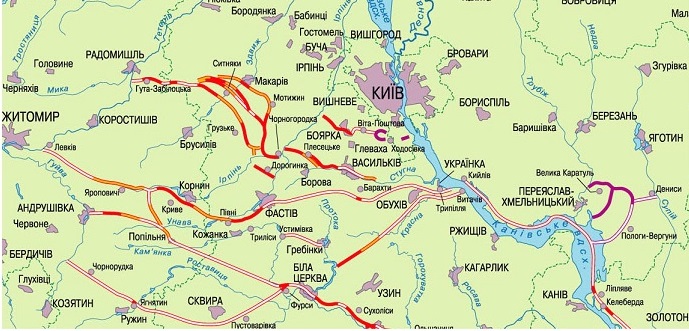 Zmiyiv Ramparts defensive system map — protecting Kyiv from all directions
Map of Zmiyiv Ramparts defensive system around ancient Kyiv.
Red lines show multiple defensive fortifications protecting the ancient center
from north (Polesian direction), east (Dnieper crossings), south (steppe nomads), and west (Carpathian approaches).
The main question that destroys all skeptics: "WHY BUILD GIGANTIC RAMPARTS AS TALL AS A 5-STORY BUILDING AROUND AN EMPTY PLACE?" The answer is obvious: KYIV ALREADY EXISTED 2600 YEARS AGO! Since no one plans to defend empty space, we can confidently assume that Kyiv or a significant settlement at its location already existed when these fortifications were built. Look at the map of ramparts placement — everything becomes clear: northern line protects from Polesian direction, eastern controls crossings over the Dnieper, southern shields from steppe nomads, western blocks Carpathian approaches. Protection radius: 50-100 kilometers from modern Kyiv's center!
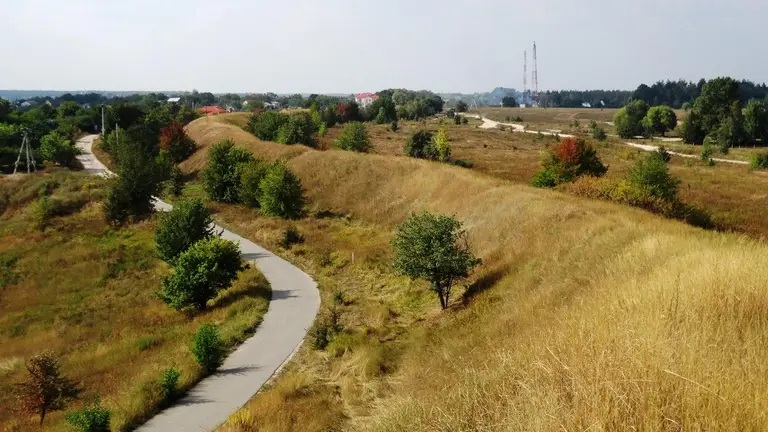 Modern Zmiyiv Ramparts — still standing after 2600 years
Modern view of Zmiyiv Ramparts showing their impressive 15-meter height.
A modern asphalt road cuts through these 2600-year-old fortifications
built in the 7th-6th centuries BC, demonstrating how ancient structures survive in contemporary landscape.
Mathematical impossibility of coincidence speaks for itself: Ukraine's area 603,000 km², protected zone ~1000 km², probability of random coincidence 0.0016%. The chance that 2600-year-old ramparts randomly surround the future Kyiv location = astronomically impossible! The volume of work is staggering: millions of cubic meters of earth, thousands of trees for framework, complex drainage system, tens of thousands of builders. Technologies included geodesy knowledge for planning, engineering load calculations, material delivery logistics, coordination of multiple crews. Only a developed civilization could accomplish this feat of ancient engineering!
Capital Age Comparison: Kyiv Destroys All Competition
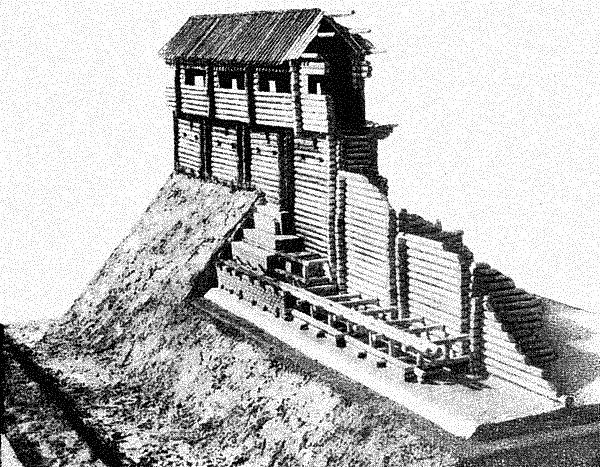 Reconstruction of ancient defensive structures on Zmiyiv Ramparts
Historical reconstruction of wooden defensive structures built on Zmiyiv Ramparts.
This drawing shows how ancient fortifications combined massive earthworks with timber constructions
— advanced engineering techniques used in the 7th-6th centuries BC.
Capital age comparison leaves no doubt: Kyiv 2600 years (according to ramparts data), Athens 3400 years, Rome 2777 years, London 2000 years, Paris 2000 years. KYIV AMONG THE OLDEST CAPITALS! Why exactly here? Geographic position — crossroads of trade routes, strategic heights — natural protection, Dnieper River — transport artery, fertile lands — agriculture foundation. There's simply no better place for a capital within 500 km radius!
Living evidence surrounds us: ramparts stand today — anyone can see them, people live among them in villages and cities, roads pass through ancient fortifications, archaeologists find new sections. Ukraine's National Academy of Sciences Institute of Archaeology confirms antiquity, international expeditions study ramparts, analyses give stable dates, geophysical research reveals structure.
⚠️ WARNING: CRITICS WILL QUESTION! Some may say: "Ramparts don't prove a city existed," "Dating methods are debatable," "This is just one interpretation." OUR ANSWER: "We welcome international expertise under UNESCO supervision! Let archaeologists from Germany, France, England examine the evidence! Science speaks louder than skepticism!" The fundamental question remains: why build massive fortifications around empty space? Logic, evidence, and common sense all point to one conclusion.
Every Ukrainian should know: our ancestors built advanced fortifications when much of Europe lived in simple settlements, Kyiv is among Europe's oldest capitals, Zmiyiv Ramparts are our national treasure, our history spans millennia. What you can do: tell the truth to friends and children, visit ramparts — touch history, photograph and share on social media, support Ukrainian archaeologists, preserve our heritage for future generations.
Zmiyiv Ramparts stood for 2600 years. They'll stand for another 2600. And Moscow-centered historical narratives are already crumbling. We are heirs of Europe's oldest civilization. Our historical memory reaches back to the first city builders of this land. Our land is the continent's cradle. And nobody — NOBODY! — can steal this truth from us. "Who holds the pen — holds the nation." "Who knows the truth — is invincible." GLORY TO UKRAINE! GLORY TO ANCESTORS! GLORY TO ZMIYIV RAMPARTS!
Scythians and Sarmatians (7th century BC – 3rd century AD)
These nomadic peoples arrived on the territory of Ukraine, leaving a mark on military culture and bringing elements of a steppe lifestyle and external trade.
Scythians: Our Land, Our Memory, Our Glory
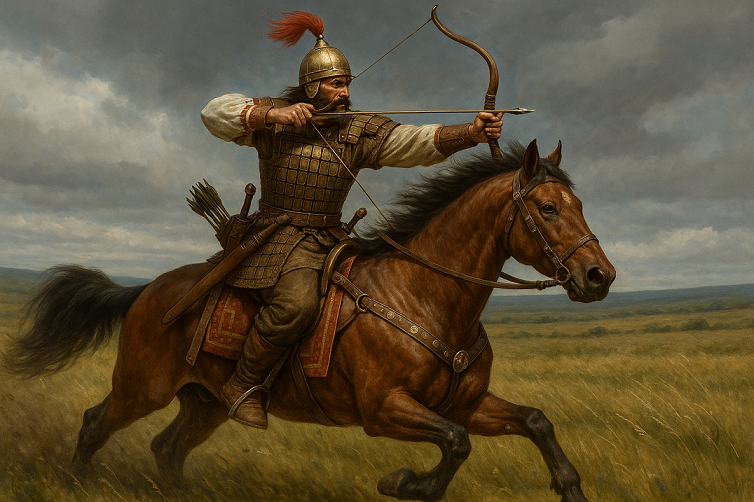 Scythian mounted archer — Ukrainian ancestral fighting spirit
Living heritage: From Scythian mounted archers to modern Ukrainian defenders.
2,600 years of unbroken warrior tradition — our historical memory, our military tradition, our victory.
Digital Instrument of Ukrainian Decolonization
We write this truth under the roar of explosions.
Under the whistle of rockets that Russian forces send to our cities to erase us from the face of the earth.
They bomb Kharkiv to destroy Scythian burial mounds of Velykyi Burluk.
They destroy Mariupol to erase Stone Tombs — sanctuaries of our ancestors.
But we know: Scythians did not leave. Scythians remained. In us.
"Yes, we are Scythians! Yes, we are Europeans!"
Exposing Moscow-Centered Historical Narratives
"Yes, we are Scythians! Yes, we are Asians!" — wrote Alexander Blok in 1918.
NO, BLOK! YOU ARE NOT SCYTHIANS!
Scythians should not be reduced to imperial stereotypes or absorbed into the "Russian world" narrative.
Scythian groups of the northern Black Sea steppe were part of the complex ancient population history of the land that later became Ukraine.
They lived here, on our land — from the Dnieper to the Donets, from the Carpathians to Azov.
Not in the lands of Muscovy, which had not yet developed plow agriculture, writing systems, or statehood.
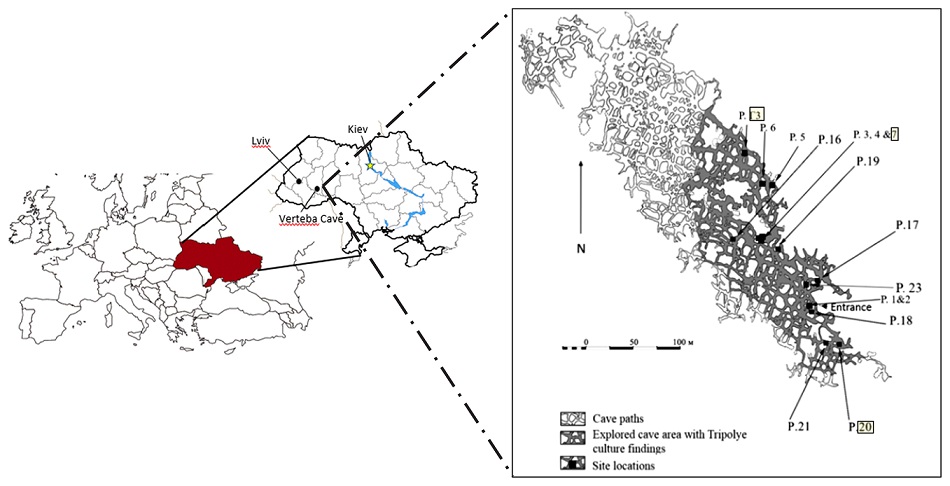 Genetic continuity: Trypillians → Scythians → Ukrainians
Scientific proof of genetic continuity:
Schmidt et al. (2020) research shows 44% of modern Ukrainians share haplogroup H with 5,500-year-old Trypillians.
This is not coincidence. This is evidence of long continuity of life on this land.
Moscow-centered historiography appropriated Scythian identity to support imperial narratives.
But science doesn't lie:
- 5,500 years ago 60% of Trypillians had haplogroup H
- Today 44% of Ukrainians have the same haplogroup H
- π = 0.00621 (low diversity = stable population)
- Tajima's D = -1.37 (autochthony confirmed)
This is not coincidence. This is evidence of long continuity of life on this land.
Trypillians → Scythians → Antes → Cossacks → Ukrainians.
One historical landscape. One cultural memory. One civilizational continuity.
Bilske Hillfort — European Capital of Scythians
Archaeology as a Verdict on Moscow-Centered Historical Narratives
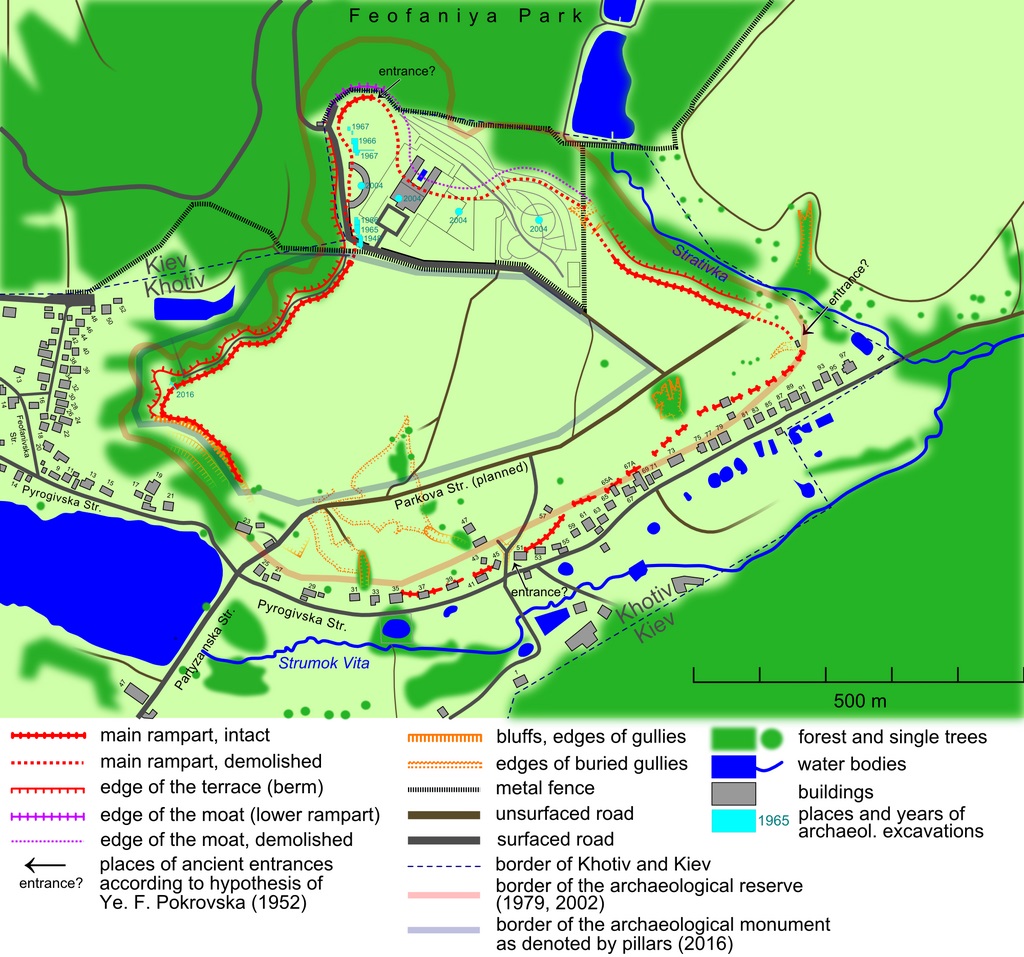 Bilske Hillfort — Herodotus' Gelon, largest city in Europe of its time
Bilske Hillfort (8th-3rd centuries BC) — 4,400 hectares, largest city in Europe of its time.
34 km of defensive ramparts — twice the length of Rome's walls!
Two-story houses, jewelry workshops, granaries — Ukrainian civilization when Moscow didn't exist.
Imagine: 4,400 hectares — the largest city in Europe of its time (8th-3rd centuries BC).
34 km of defensive ramparts — twice the length of Rome's walls!
Two-story houses, jewelry workshops, granaries.
Herodotus' Gelon — not Russian heritage, but Ukrainian civilization that arose when Moscow did not yet exist.
And where are the Scythian kings buried?
100% of Scythian royal tombs — only in Ukraine (Dnieper lowlands).
Tovsta Mohyla, Chortomlyk, Solokha — the greatest treasures of gold that adorn world museums.
The golden pectoral — a symbol of Ukrainian craftsmanship, not "Russian glory."
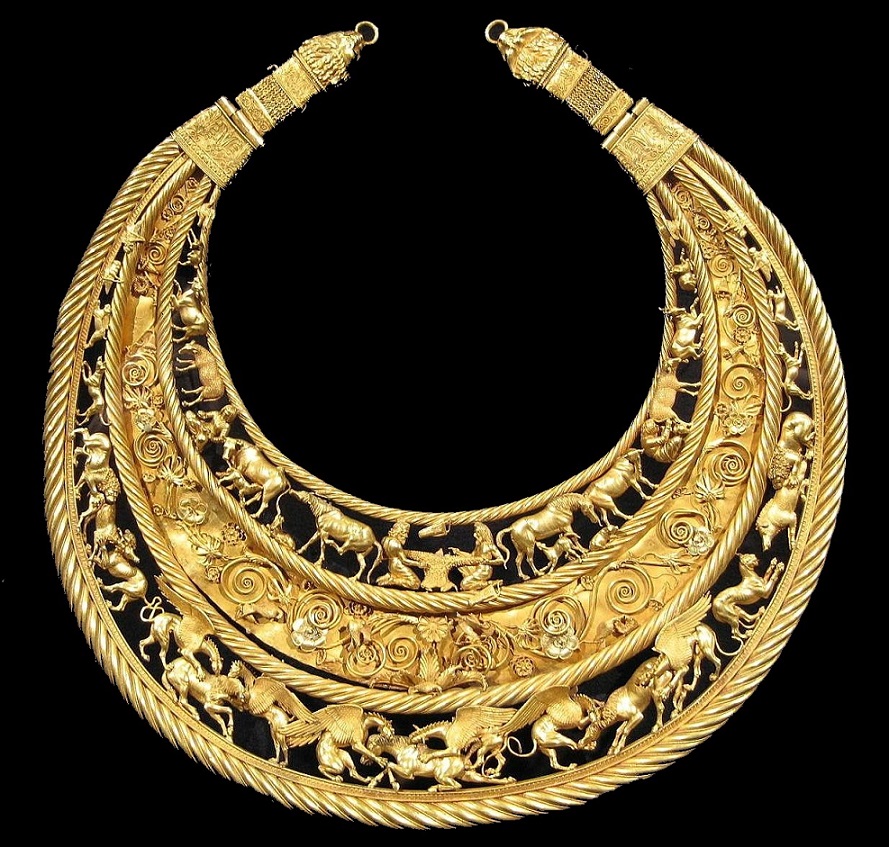 Scythian Golden Pectoral — masterpiece of Ukrainian craftsmanship
Golden pectoral from Tovsta Mohyla burial mound (4th century BC).
Found in Ukrainian soil, created by Scythian masters — Ukrainian heritage, not Russian.
Absurdity of Russian version: Why transport kings thousands of kilometers for burial?
Golden Plow — Divine Mandate of Grain Growers
Technology as Separation of Civilizations
According to legend, Scythians received a golden plow from heaven.
This is not myth. This is a symbol of agricultural genius that gave bread to the world.
Plow + two oxen (Ukrainian technology) vs sokha + horse (Muscovite technological backwardness in this historical comparison).
Interfluves + chernozems (high-yield agriculture) vs floodplains + podzols (primitive slash-and-burn farming).
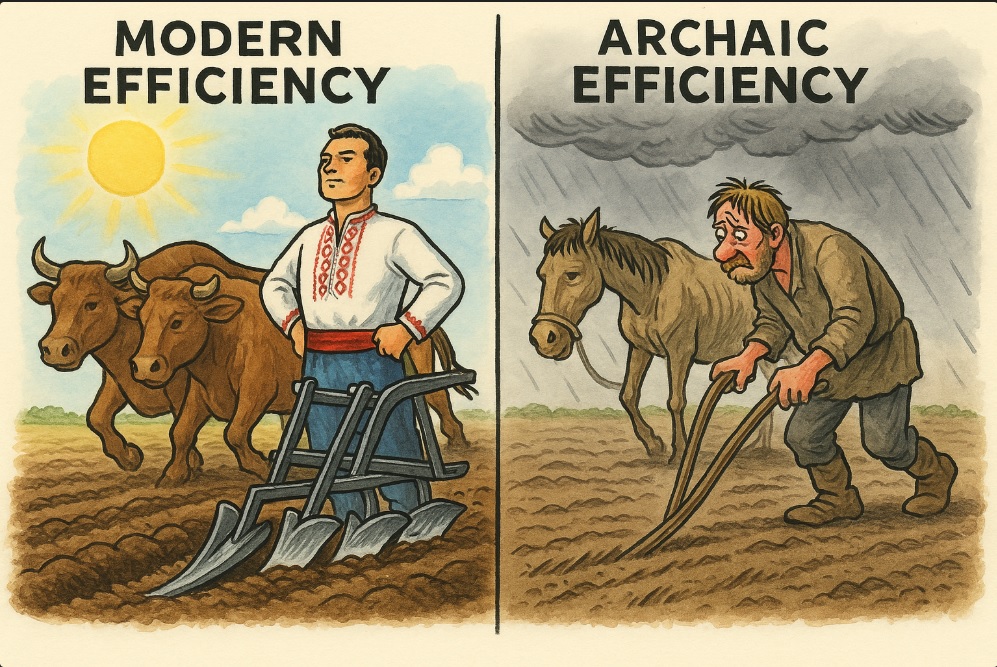 Technological comparison: Ukrainian plow and Muscovite sokha
This is not just a difference in tools. It's a civilizational chasm.
Left: The Ukrainian plowman — heir to the Scythians and Cossacks.
The double-ox plow — a “tractor of antiquity,” symbol of the will to master the land.
Right: The Muscovite *sokha* — a symbol of imposed agrarian limitation,
“scratching” the surface for centuries.
Freedom-Oriented Technology versus Enforced Dependence and Stagnation.
This illustration exposes a deep-rooted clash in the historical paths of Eastern Europe: Freedom and Technology vs. Enforced Dependence and Stagnation.
Left (Modernity / Efficiency)
The Ukrainian farmer on rich black soil is the heir to the free spirit of Scythian nomad-warriors and Cossack independence. His two-ox plow — a "tractor of antiquity" — symbolizes mastery of the land, scale, and a leap forward in technology.
This wasn’t just a tool — it was a weapon of progress, empowering the descendants of Scythians and Cossacks to tame the Wild Steppe and transform it into a breadbasket.
Deep plowing was an act of will — the will to dominate the land — inherited from horsemen of the steppe and self-governing warrior-farmers.
Ukraine fed the world with grain — and when its people were driven from their native land, they took with them not just seeds, but an ancient knowledge that could turn virgin soil into fertile fields. And that’s why Americans, Canadians, and Argentinians didn’t just accept Ukrainians — they paid them, recruited them, actively mobilized them. Because they knew: without Ukrainians, their countries would never have become the "breadbaskets of the world." Ukraine is not a precursor. Ukraine is the source. And its people are the missionaries of bread.
Here, technology met an ancient spirit of freedom and aspiration for prosperity.
Right (Archaic / Inefficient)
The real contrast isn't in the tools, but in the mindset. The Muscovite peasant with his *sokha* was both a victim and embodiment of centuries of submissive servitude.
His sokha wasn’t a farming tool — it was a symbol of voluntary limitation, of primitivism imposed from above and embraced below.
It didn’t really till the soil — it merely “scratched” it. And in doing so, it also scratched away at any hope for change. Social degradation and poverty were not merely consequences of environment — they were the byproducts of a culture of enforced dependence, a lack of will, and deep-rooted passivity reinforced by tradition and obedience to a “strong hand.”
The soil was never the real issue. Enforced culture of submission was — killing all initiative and dooming people to eternal subsistence, forever “scratching the surface” of life under the weight of their own submission.
Poverty wasn’t the cause — it was the inevitable outcome of an imperial culture of submission.
European Context: Scythians — Part of Europe
Ukrainians are not a "young people" who appeared in the 12th century.
We are the grain-growing nation of the world, which from ancient Scythians to today gives bread to the world.
Our settlers carried grain with them to Canada, Argentina, USA.
Poltavka, Chernihivka, Kyivka — toponymic markers that say: we are here, we develop, we feed.
Breaking with Colonial Myth
Scythians were not "isolated steppe barbarians." They:
- Traded with Greeks of the Bosporan Kingdom (Kerch) — European cultural code
- Shared traditions with Celts and Thracians — common European foundation
- Created equestrian culture — prototype of European chivalry
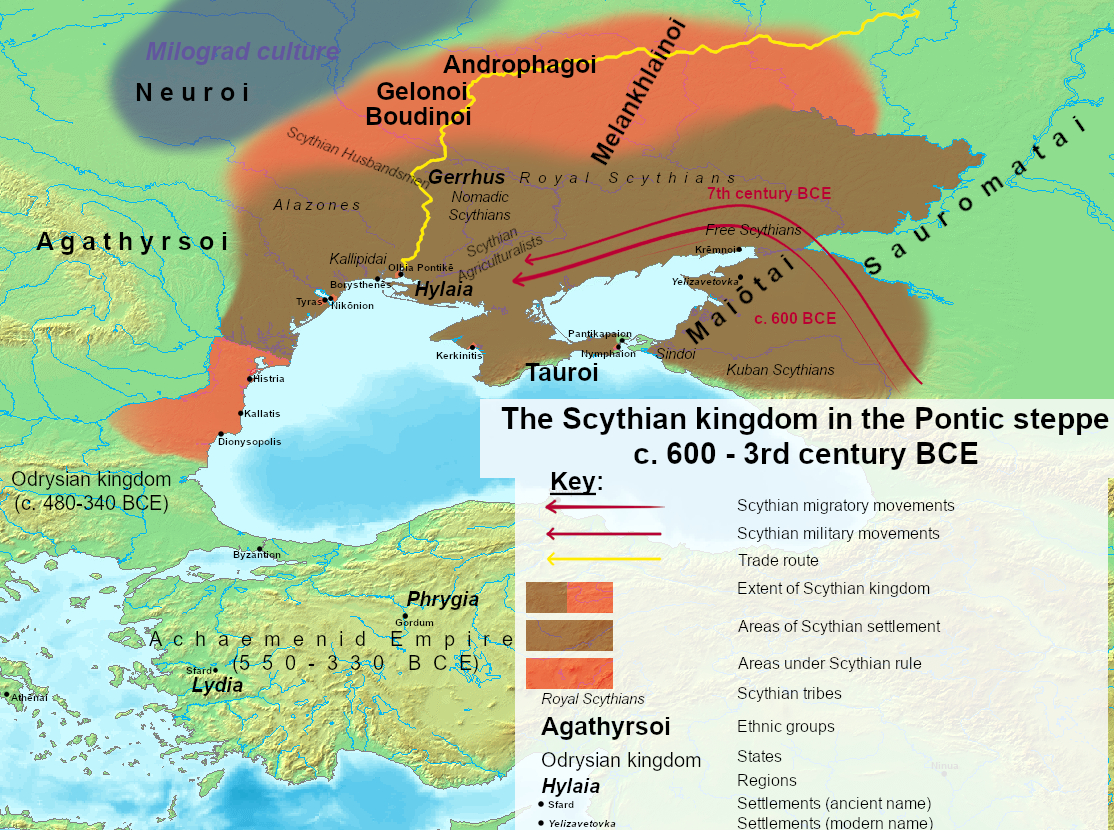 Scythian Kingdom: Royal Scythians centered in modern Ukraine
PROOF: Scythian Kingdom centered in Ukraine!
Royal Scythians (red area) = modern Ukraine. Gelon = Bilske Hillfort.
No "Moscow" anywhere on this map! Scythians belong to Europe, not the "Russian world"!
Their legacy is our ticket to the European family, which we have held for 2,600 years.
Fighting Spirit: From Scythians to Special Operations Forces
512 BC: Scythians defeated Darius I — the first "war of attrition" in history.
Strategy: "Scorched earth" → Scythian → Cossack → SOF tactics.
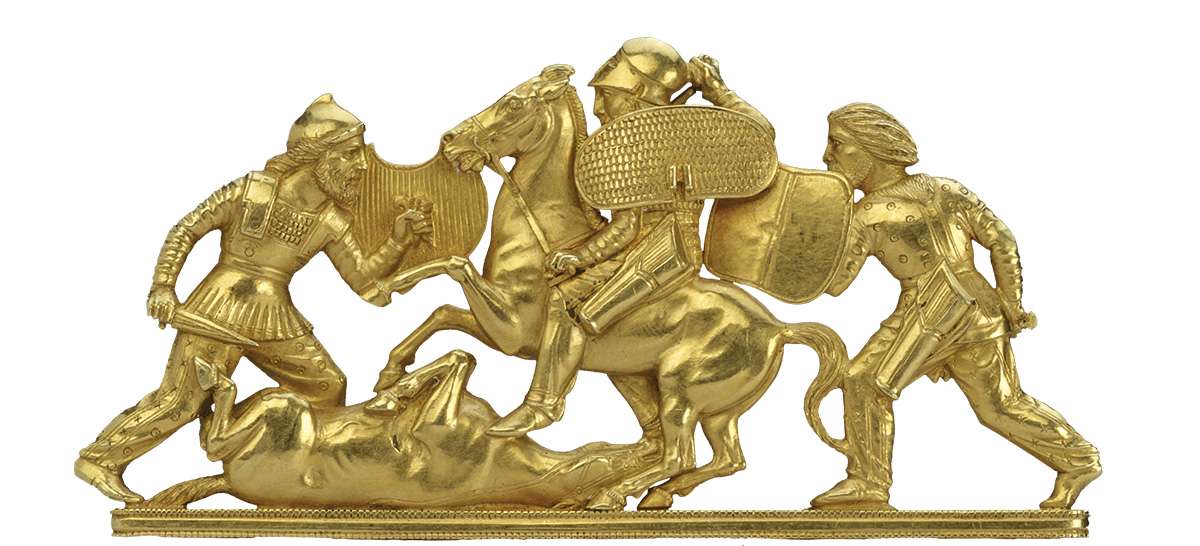 Scythian warriors in battle — authentic golden artwork
Scythian warriors in battle.
Golden relief from archaeological finds in Ukraine — authentic masterpiece
created by Scythian artisans, showing the military prowess of our ancestors.
Mounted archers → Cossack cavalry → Ukrainian tankers "Da Vinci Wolves".
Continuity: 2,500 years of invincible spirit of resistance.
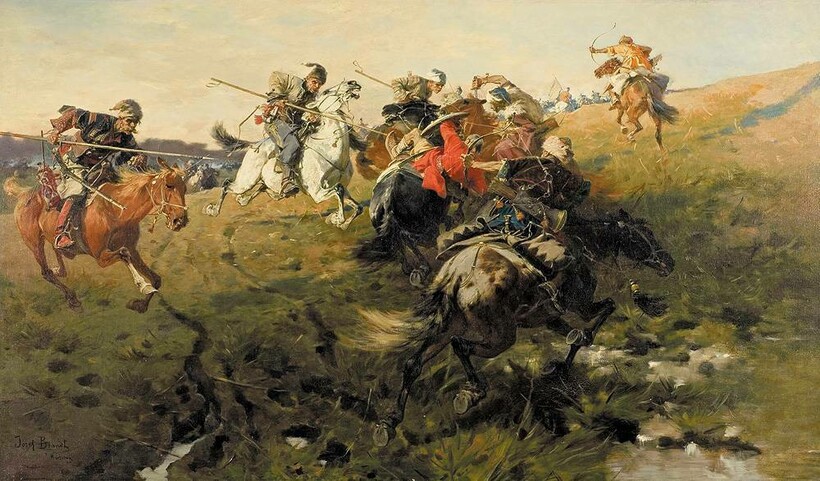 Cossack battle — Scythian tactics evolved
Military continuity: Scythian mobility → Cossack cavalry → Modern SOF.
Same fighting spirit, same land, same remarkable continuity of Ukrainian identity.
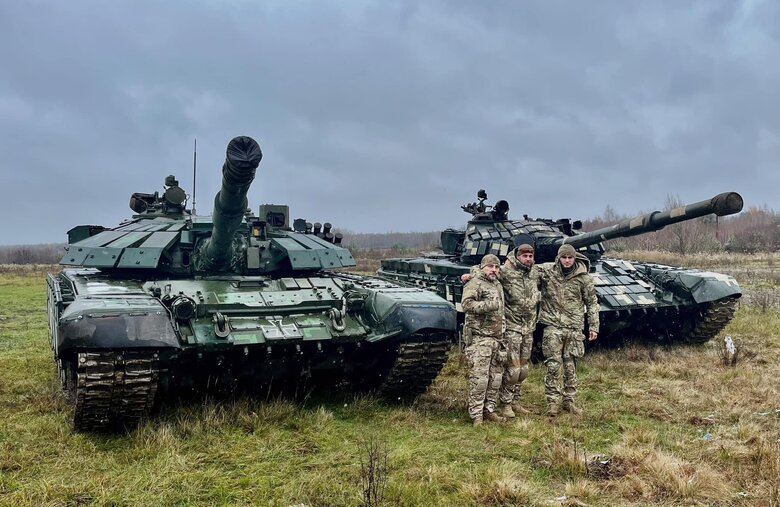 Da Vinci Wolves — modern Scythian warriors
2024 AD: Ukrainian tankers continue 2,600-year-old tradition.
From Scythian mounted archers to armored "Da Vinci Wolves" — same cultural legacy, same victory.
Continuity of Resistance
Mounted archers → Cossack cavalry → Ukrainian tankers "Da Vinci Wolves".
Continuity: 2,500 years of invincible spirit of resistance.
Living Heritage: Scythians Among Us
Genetics, Language, Anthropology
Language — time machine:
- Surname Perederiy = Persian "perederaya" ("overseas Scythian")
- Hydronyms: Don (Scythian "river"), Dnieper (Iranian "deep river")
Anthropology — mirror of history:
- Central Ukrainian type (60% of population): tall stature, phenotypic traits consistent with ancient steppe populations (as seen in Trypillian figurines and archaeological remains)
- Physical continuity — visible in historical anthropology.
Genetics — living chronicle:
The cited genetic research places part of the Ukrainian population within a broader European continuity context.
Haplogroup H — one of the genetic indicators suggesting partial continuity between Trypillian-related communities and part of the modern Ukrainian population.
Declaration of Scythian Revival
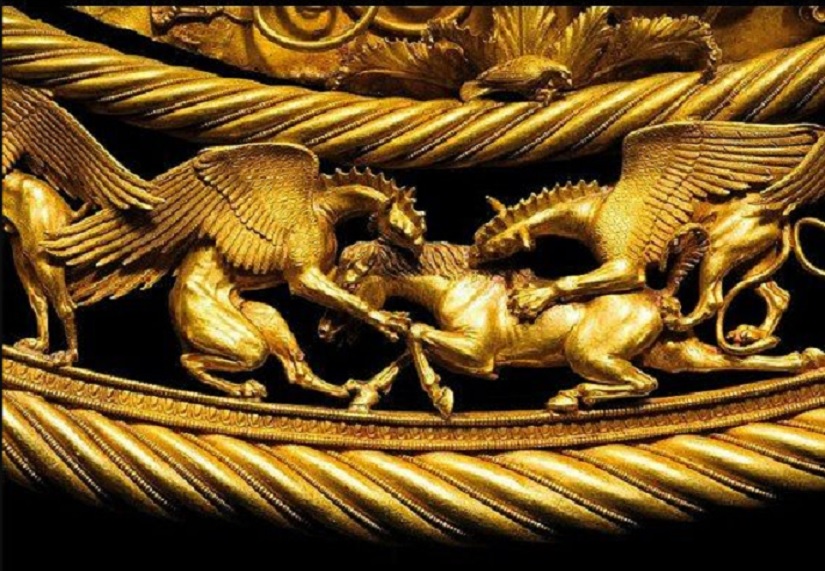 Ancient Scythian griffins — symbol of power and victory
Scythian golden griffins — ancient symbol of power and victory.
Found in Ukrainian burial mounds, created by Scythian masters 2,500 years ago.
 Scythian Griffins — modern Ukrainian warriors embracing ancestral identity
423rd Separate Battalion of Unmanned Systems "Scythian Griffins"
From Scythian mounted archers to drone operators — same spirit, new technology.
Scythians did not leave. Scythians remained. In us.
"When we say 'Scythian' — we mean 'Ukrainian'!"
WE DECLARE:
We did not "go nowhere" — WE REMAINED.
We are not a "young people" — WE ARE AN ANCIENT CIVILIZATION.
We are not "younger brothers" — WE ARE HISTORICAL HEIRS OF SCYTHIANS.
The memory of the steppe, the mounds, and the struggle for freedom remains part of Ukrainian historical identity.
We are not a colony. We are not a province.
We are a civilization-people that gives the world:
- Song — millions of folk melodies that touch hearts from Japan to Canada
- Bread — chernozem that feeds the world
- Wings — through Korolev, Glushko, Yangel — Ukrainians who brought humanity to space
 From Scythian grain to modern Ukrainian wheat — feeding the world for 2,600 years
Scythians did not leave. Scythians remained. In us.
And we will not surrender.
Final: Our Manifesto Under Bombardment
When Russian forces bomb Kharkiv, they think they will break us.
But they don't understand:
We are a people who survived the Holodomor. Under repressions. Under occupations. Under lies.
We are a people who recovered again and again, as settlers came from the Carpathians to revive the land.
We are not a colony. We are the motherland.
We are not slaves. We are free people.
We are not a young people. We are an ancient civilization.
We are heirs of Trypillia, Scythia, Antia, Rus,
creators of world granaries,
keepers of Europe's oldest culture,
fighters for freedom for 1,000 years.
We do not ask for recognition.
We declare it.
Glory to our ancestors — Scythians, Trypillians, Cossacks!
Glory to Ukraine — ancient, strong, free!
🇺🇦 THIS IS NOT HISTORY. THIS IS A DECLARATION OF INDEPENDENCE OF MEMORY. 🇺🇦
Goths and Germanic Tribes (3rd–4th centuries AD)
During this period, Ukraine became part of the Great Migration of Peoples, when Germanic tribes, including the Goths, migrated to these lands, leaving a significant imprint on culture and subsequent Ukrainian ethnogenesis.
Slavs (2nd–6th centuries AD)
Slavic tribes gradually settled in Ukraine, forming the foundation for future East Slavic nations, including Ukrainians.
Normans (Vikings, 9th century)
In the 9th century, the Varangians (Normans)—Swedes, Danes, and Norwegians—actively settled in Ukraine, playing an important role in the creation of Kyivan Rus. These Vikings became an essential part of cultural and political development, laying the foundations of statehood and governance in Eastern Europe.
Normans (9th century)
Scandinavian warriors and merchants. They brought governance, trade, and maritime knowledge. The Rurikid dynasty and statehood began with them. Use an image of a Viking or their ship (drakkar).
Kyivan Rus (9th–13th centuries)
A state centered in Kyiv that united the Eastern Slavs. Law, diplomacy, literacy, and culture thrived. A photo of Saint Sophia Cathedral, the Golden Gate, or Yaroslav the Wise fits here.
Kyivan Rus–Ukraine: A Civilization Ahead of Its Time
While Western Europe sank into feudal darkness, Kyiv was building cathedrals and corresponding with emperors. Ukraine absorbed both East and West, forging its own path. Place a strong image here reflecting civilization.
Ukrainians are not a product of the 12th century. They are heirs of millennia.
The strength of Ukrainians lies in the depth of their roots — stretching from Trypillia, through burial mounds, chronicles, and ancestral memory.
Yaroslav the Wise: The Father-in-Law of Europe
Thanks to Yaroslav the Wise’s far-sighted policies, Kyivan Rus-Ukraine established strong dynastic ties with leading royal houses of Europe.
Kyiv in the 11th Century: A Center of Enlightenment and Culture
Kyiv, the capital of Kyivan Rus, in the 11th century became an important center of education, culture, and science.
However, Kyivan Rus-Ukraine Partially Fell Under the Tatar-Mongol Horde and Muscovy
After the weakening of Kyivan Rus, its lands fell under the control of the Tatar-Mongol Horde and later—under the rule of Muscovy.
Galicia-Volhynia: The Last Bastion of Ukrainian Sovereignty
Galicia-Volhynia remained the only unconquered part of Kyivan Rus-Ukraine. On October 7, 1253, Prince Danylo Romanovych accepted the royal crown from the Pope’s envoys, becoming a full-fledged European monarch—King of Rus-Ukraine.
Ukraine in the 16th-18th Centuries: Part of the Polish-Lithuanian Commonwealth
During this period, Ukrainians closely interacted with Poles, Lithuanians, and Jews, shaping cultural and political developments.
The Cossack Era (16th-18th Centuries)
During this time, Ukrainians developed a unique military and democratic culture.
Freedom Was Achieved Only in Modern Times
Today, Ukrainians continue to defend their right to freedom and independence.
Kyiv: The Ancient Bastion of Europe, Moscow: The Falsifier of History
The history of Ukraine has been falsified for centuries. Kyiv is much older than commonly believed, as evidenced by the Zmiyiv Ramparts—grand defensive structures built 2,600 years ago — yet some evidence suggests they could be even older.
Moscow chose the path of falsification:
- Stole the name "Rus" from Ukraine.
- Created the myth of "brotherly nations" to justify its violence.
- Rewrote chronicles, hiding the true origins of Kyivan Rus-Ukraine.
But history is stronger than imperial narratives. Kyiv has been and remains one of the historical hearts of Europe, while Moscow-centered imperial tradition repeatedly absorbed and appropriated foreign heritage.
🧬 Historical Continuity of Ukrainian Ethnos
From the Trypillians to Modernity: A Continuous History
| Cultural Stage | Time Period | Contribution to Ukrainian Ethnogenesis | Cultural Symbols |
|---|---|---|---|
| Trypillian Culture | 5th–3rd millennium BC | Agriculture, culture, settlements — 44% of modern Ukrainians in the cited study share haplogroup H also found in Trypillian samples (continuity indicator) (haplogroup H) | Ornaments, pottery, settlement planning |
| Scythians & Sarmatians | 7th century BC – 3rd century AD | Nomadic military culture, trade, steppe lifestyle elements, golden art | Burial mounds, mounted archers, golden artifacts |
| Goths & Germanic Tribes | 3rd–4th centuries AD | Migrations, archaeological traces, brief presence, craft traditions | Brooches, swords, fibulae |
| Slavs | 2nd–6th centuries AD | Core of East Slavic peoples, linguistic foundation, customs | Settlements, language, agricultural traditions |
| Normans (Varangians) | 9th century AD | Formation of ruling dynasty (Rurik), trade, governance, seafaring | Longships, Prince Rurik |
| Kyivan Rus | 9th–13th centuries AD | Statehood, law, Christianity, culture, literacy | Saint Sophia Cathedral, Yaroslav the Wise |
| Kyivan Rus – Ukraine | 9th–13th centuries AD | Center of civilization, bridge between East and West, European integration | Correspondence with emperors, Golden Gate |
💬Conclusion:
Ukrainians are not a "people from the 12th century" but descendants of a millennial civilization. Genetically and culturally — this is a blend of farmers (Trypillian ~44%), nomads, Slavs, Varangians, and others.